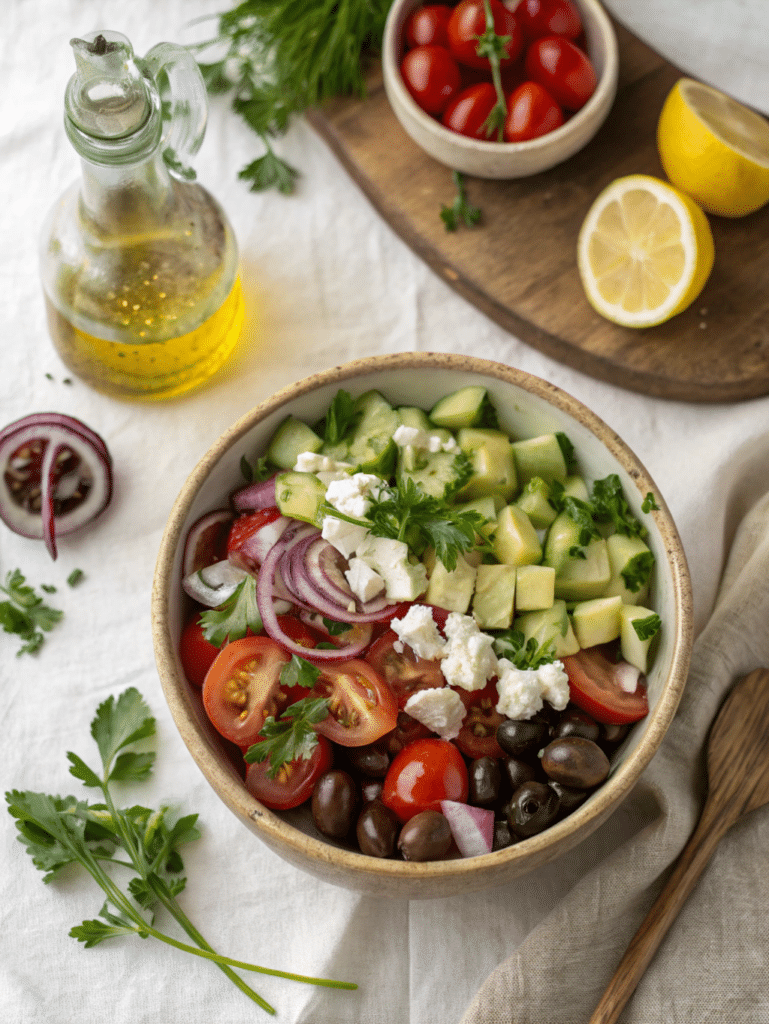
If there’s one dish that captures the heart of Mediterranean cooking, it’s the Greek salad recipe. Crisp cucumbers, juicy tomatoes, salty Greek olives, and creamy feta come together with a bold, zesty Greek salad dressing. I’ve been making some version of this since my early days of exploring healthy eating, and it never disappoints. Whether you’re building a light lunch or a vibrant side dish, this classic has you covered. You’re going to love how easy it is to toss together, and even more how satisfying it tastes.
In this Article
Key Takeaway: What You Need to Know
- This Greek salad recipe is quick, ready in under 15 minutes.
- Uses fresh, classic ingredients like cucumbers, tomatoes, feta, and Greek olives.
- No lettuce needed, this follows the authentic style.
- Features a simple, homemade Greek salad dressing.
- Naturally vegetarian, gluten-free, and ideal for any Mediterranean diet.
The Story Behind This Greek Salad Recipe
Discovering the True Greek Salad at Home
I still remember the first time I threw together a Greek salad recipe on a hot summer day here in Austin. I wasn’t aiming for anything fancy, just something cool, quick, and refreshing. I chopped up a few ripe tomatoes, sliced some cucumbers, tossed in crumbled feta, and added a handful of Greek olives I had left over from a cheese board. It was love at first bite.
Back then, I wasn’t sure exactly what is in Greek salad traditionally. I just followed my instincts, and it turned out pretty close to the real thing. Over time, I started exploring the classic ingredients and realized this wasn’t just any salad. It was a staple of the Mediterranean diet, built on simple, honest food.
Now, this Greek cucumber salad variation has become one of my favorite go-to dishes. Whether it’s part of my Mediterranean diet plan or just a last-minute lunch, it never lets me down.
Why This Salad Never Gets Old
This Greek salad recipe is far from boring. It’s fresh, colorful, and full of satisfying textures, from crisp cucumbers to creamy feta and that punchy homemade Greek salad dressing. You don’t need lettuce. You don’t need anything fancy. And yet, it always delivers.
When I want something light but bold, this is the bowl I crave. It fits effortlessly into any Mediterranean diet lifestyle, whether I’m serving it next to grilled meats or enjoying it solo with pita bread.
So if you’ve ever wondered what is in Greek salad beyond just greens, you’re in the right place. This dish is simplicity at its best, honest, hearty, and absolutely delicious.
What Is in a Greek Salad?
The Core Ingredients of a Classic Greek Salad Recipe
If you’ve ever wondered what is in Greek salad, the answer lies in a handful of humble, fresh ingredients that deliver bold Mediterranean flavor in every bite. A traditional Greek salad recipe doesn’t rely on lettuce or filler, just crisp vegetables, briny accents, and creamy cheese, all brought together by a punchy Greek salad dressing.
Here’s what you’ll need for the most authentic experience:
- Ripe tomatoes (cherry or heirloom)
- Crisp cucumber (Persian or English work best)
- Thinly sliced red onion
- Greek olives, preferably Kalamata
- Creamy blocks or crumbles of feta cheese
- A simple dressing made of olive oil, lemon juice or red wine vinegar, garlic, and oregano
This combination forms the heart of any traditional greek salad recipe. It’s the foundation of countless variations, including the well-loved greek cucumber salad, which often skips the tomato and focuses on cucumber and onion for a lighter crunch.
You’ll find that Greek olives aren’t just an afterthought, they’re essential. Their saltiness balances the sweetness of the tomato and the acidity of the vinaigrette. And don’t skip the olive oil-based Greek salad dressing, it’s what binds everything together.
Fresh, Balanced, and Built to Satisfy
Each ingredient in this greek salad recipe plays a key role. The cucumbers keep it crisp, the feta adds creaminess, and the dressing ties it all together with a tangy finish. It’s proof that when you start with quality ingredients, you don’t need much else.
If you’re following a Mediterranean diet food list, this salad checks every box: whole foods, heart-healthy fats, and zero processed fluff. It’s also a star player in your Mediterranean diet recipes lineup.
This is more than just a salad, it’s a timeless recipe built on balance, tradition, and taste. Whether you call it a Greek cucumber salad or stick to the classic name, it’s the same fresh, reliable crowd-pleaser.
Making the Classic Greek Salad Recipe
How to Make the Best Greek Salad Recipe in Just 3 Steps
Creating a flavorful and authentic Greek salad recipe at home is easier than you think. You don’t need any fancy tools, and you definitely don’t need lettuce. In fact, what is in Greek salad is part of what makes it so unique, simple, bold ingredients that come together quickly and never fail to impress.
Here’s how I make my go-to greek salad recipe, every time:
- Chop the base: Slice up your cucumber, tomatoes, and red onion. For a Greek cucumber salad twist, go heavier on the cucumber and lighter on the tomato.
- Add the extras: Toss in crumbled or cubed feta, a generous handful of Greek olives, and, if you’re feeling bold, a few thin strips of bell pepper or capers.
- Drizzle & mix: Pour over your homemade Greek salad dressing, a simple mix of extra virgin olive oil, red wine vinegar, minced garlic, lemon juice, oregano, and a touch of salt. Mix gently so everything gets coated without mashing the ingredients.
That’s it. This greek salad recipe takes under 15 minutes to prepare and is bursting with texture and flavor in every forkful.
Tips for Making This Greek Salad Recipe Perfect Every Time
Use the freshest vegetables you can find. Ripe tomatoes and firm cucumbers are key. Always go for high-quality Greek olives, preferably Kalamata, and real feta in brine, not the pre-crumbled kind.
And don’t underestimate the Greek salad dressing. That simple mix of olive oil and vinegar is what pulls it all together.
This greek salad recipe is perfect as a side to grilled meats, or even with something hearty like this prime rib recipe or a slow-cooked frozen meatballs in crock pot dish. It’s light, flavorful, and full of Mediterranean goodness.
Whether you’re making a traditional version or a Greek cucumber salad variation, once you master this greek salad recipe, it’ll be on repeat all year long.
The Greek Salad Dressing That Makes It Shine
The Essential Greek Salad Dressing
If there’s one thing that elevates every Greek salad recipe, it’s the dressing. A proper Greek salad dressing isn’t creamy or store-bought. It’s made from a few pantry staples that bring everything together in the freshest way possible.
Traditional dressing includes:
- Extra virgin olive oil
- Red wine vinegar or fresh lemon juice
- Garlic (minced or grated)
- Dried oregano
- Sea salt and black pepper
This dressing isn’t just a finishing touch, it’s the core of what brings balance to the bold ingredients in a greek salad recipe. The acidity cuts through the creamy feta, while the olive oil coats the greek olives, tomatoes, and crisp cucumbers with richness.
And yes, it’s the same simple dressing you’d find on a classic greek cucumber salad, where fewer ingredients let that vinaigrette really shine.
Flavor Variations You Can Try at Home
The beauty of this greek salad recipe is its flexibility. While the base is tried and true, the dressing can be tailored to your taste. Some delicious add-ins:
- A touch of Dijon mustard for thickness
- A pinch of cumin for earthy warmth
- Lemon zest for brightness
- A spoonful of plain Greek yogurt for creaminess
Even with these tweaks, the essence of the greek salad dressing remains. It should always be bold, balanced, and layered.
Once you’ve nailed this dressing, you’ll want to pour it over everything, from roasted veggies to grilled meats. It also pairs beautifully with more hearty mains like this beef stew recipe or as a light counter to your weekly Mediterranean diet meal plan.
This isn’t just the sauce to a greek salad recipe, it’s the soul of it. And once you try it, you’ll never look at bottled dressings the same way again.
The Greek Salad Dressing That Makes It Shine
The Essential Greek Salad Dressing
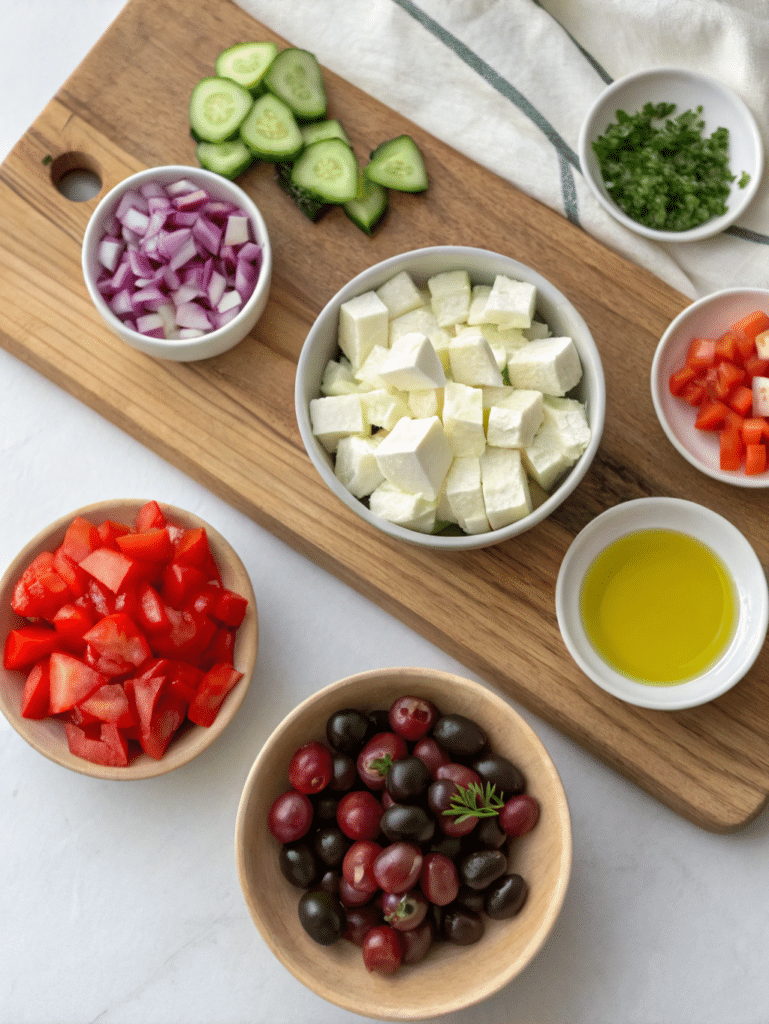
Ask any Greek grandmother, or check any traditional Greek salad recipe, and you’ll discover that the dressing is what makes it unforgettable. A good Greek salad dressing isn’t complicated, but it must be bold, fresh, and perfectly balanced.
Here’s the authentic base:
- Extra virgin olive oil
- Red wine vinegar or freshly squeezed lemon juice
- Grated garlic
- Dried oregano
- Sea salt and cracked black pepper
This simple vinaigrette enhances the entire dish. It clings to the cucumbers and tomatoes, coats the feta with richness, and adds punch to the briny Greek olives. If you’ve ever made a Greek cucumber salad, you know how crucial the right dressing is.
The USDA lists olive oil as a rich source of heart-healthy monounsaturated fats and antioxidants (source), making this dressing as nourishing as it is flavorful.
And yes, this is the same traditional blend found in the authentic version of Horiatiki (village salad), as noted on Wikipedia’s Greek salad page.
Variations You Can Try at Home
This Greek salad recipe is a great canvas for custom twists. While the classic version stands on its own, you can enhance your Greek salad dressing with a few creative add-ins:
- Dijon mustard for a tangy kick
- Honey or maple syrup for mild sweetness
- Lemon zest for extra brightness
- A dollop of plain Greek yogurt for creaminess
Whichever way you go, the dressing should always elevate the other ingredients in the greek salad recipe, not drown them.
Once you master it, try pairing this salad with bold main dishes like this hearty beef stew recipe or as a fresh side in your Mediterranean diet meal plan.
A great Greek salad dressing is more than just a mix of ingredients, it’s what ties the story of this salad together.
Do You Put Lettuce in Greek Salad?
Why Lettuce Isn’t in Traditional Greek Salad Recipes
One of the most common questions about any Greek salad recipe is: Do you add lettuce? The short answer, not in the original version.
Authentic greek salad recipes, known in Greece as Horiatiki, contain no lettuce. The salad is traditionally made with a few basic ingredients: tomato, cucumber, red onion, Greek olives, feta, and a classic Greek salad dressing. No leafy greens.
If you’ve ever wondered what is in Greek salad, lettuce isn’t it.
The reason is simple, Greek summers are hot and crisp greens wilt fast. Village salads were meant to be rustic, hearty, and built to withstand the heat. That’s why ingredients like cucumber, tomato, and onion take center stage in a true Greek cucumber salad.
You can find more about the importance of food safety when handling raw leafy greens in this CDC advisory on leafy greens, which adds another reason some people prefer lettuce-free salads.
Modern Twists: When Lettuce Makes Sense
While not traditional, adding lettuce to a Greek salad recipe isn’t “wrong”, especially if you’re building a meal-sized salad. Romaine can add bulk and crunch without overpowering the other elements. Just don’t let it dilute the flavors.
If you choose to include it, keep the other core components front and center: the Greek olives, feta, and that bold Greek salad dressing.
You can also explore hearty alternatives like serving the salad with a prime rib roast recipe or making it part of your Mediterranean diet lifestyle, both great ways to enjoy this dish with or without lettuce.
Bottom line? Whether you go classic or customize, this greek salad recipe always delivers on flavor and freshness.
Greek Salad Recipe
Ingredients
Equipment
Method
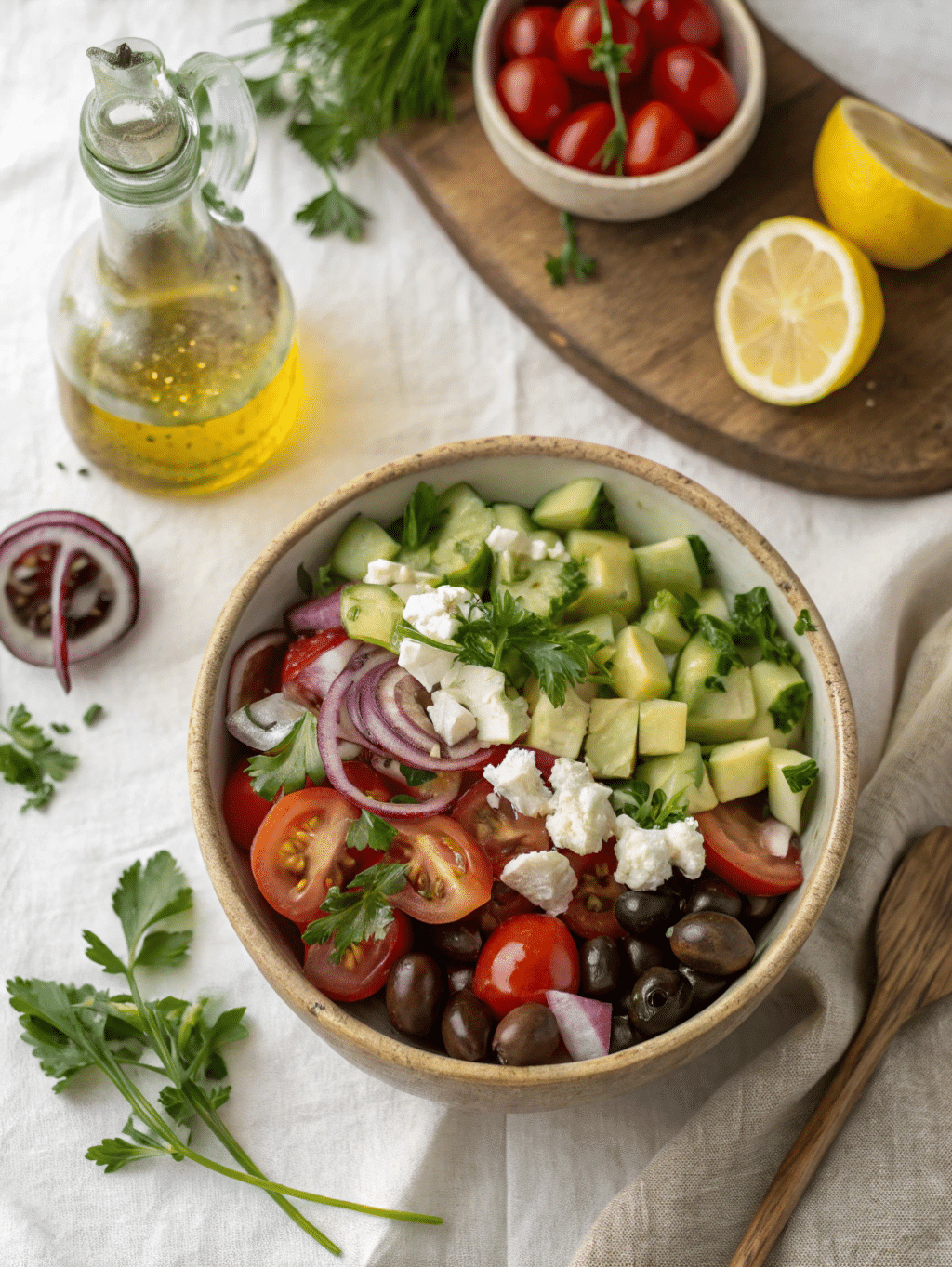
- Wash and chop the cherry tomatoes and cucumber. Thinly slice the red onion.
- In a large mixing bowl, combine tomatoes, cucumber, red onion, Greek olives, and feta cheese.
- In a small jar or bowl, whisk together olive oil, red wine vinegar, lemon juice, garlic, oregano, salt, and pepper.
- Pour the dressing over the salad and toss gently to coat all ingredients evenly.
- Let sit for 5 minutes to allow flavors to meld before serving.
Nutrition
Notes
Tried this recipe?
Let us know how it was!What to Eat with Greek Salad
Perfect Pairings for a Balanced Mediterranean Meal
One of the best things about any Greek salad recipe is how versatile it is. It plays well with just about everything, from roasted meats to plant-based sides. Whether you’re serving it for lunch or dinner, knowing what to eat with Greek salad can elevate the whole meal.
For a classic Mediterranean combination, pair your salad with:
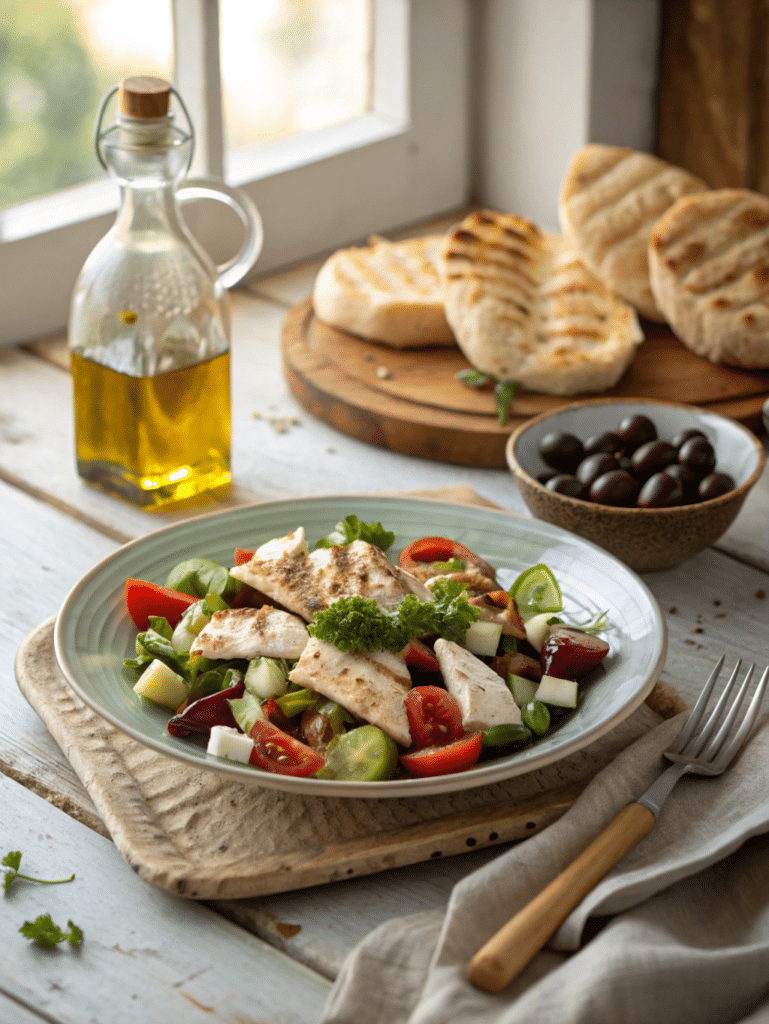
- Grilled chicken or lamb
- Roasted vegetables
- Baked fish or shrimp
- Warm pita bread or flatbread
- Stuffed grape leaves (Dolmas)
Because this greek salad recipe is naturally rich in fiber and healthy fats, from the greek olives and olive oil-based greek salad dressing, it pairs beautifully with lean proteins. The USDA recommends including a variety of protein foods in your meals, and this salad checks every box when you add grilled chicken or fish.
Looking for something heartier? Try it with a prime rib roast for a rich, protein-packed dinner, or serve it with frozen meatballs in crock pot for a satisfying Mediterranean fusion.
Turning a Greek Salad Recipe into a Main Dish
Want to make your greek salad recipe the star of the table? Just add one or two hearty extras:
- Chickpeas: Turn it into a Mediterranean protein bowl
- Quinoa: Makes a filling base for a grain salad version
- Avocado: Adds creaminess and extra good fats
- Grilled halloumi or tofu: Great vegetarian protein boost
These additions transform your salad into something more than a side, more like a full meal that’s clean, satisfying, and totally customizable.
Even with upgrades, the basics remain the same: cucumber, tomato, feta, greek olives, and bold greek salad dressing. Once you know what is in Greek salad, you can build on it endlessly.
Whether you’re crafting a light side dish or a full Mediterranean plate, this greek cucumber salad base offers endless mealtime inspiration.
Storage, Nutrition
How to Store Your Greek Salad the Right Way
This fresh and vibrant greek salad recipe holds up better than most salads when stored properly. But because it’s built with juicy ingredients and dressed in oil and vinegar, a few storage tips go a long way.
If you’re meal prepping:
- Store the vegetables and dressing separately. This prevents sogginess.
- Keep feta and olives in a sealed container, so their brininess doesn’t overpower the mix too soon.
- Eat within 2–3 days for best texture and taste.
Once tossed together, your greek salad recipe is best consumed within 24 hours. After that, cucumbers and tomatoes tend to release too much water, softening the salad.
You can also store the undressed base as a greek cucumber salad for a few extra days, adding fresh greek salad dressing right before serving.
FAQs About Greek Salad Recipes
How do you make a Greek salad?
A traditional greek salad recipe includes tomatoes, cucumber, red onion, feta, greek olives, and a simple greek salad dressing made with olive oil, lemon or vinegar, oregano, and garlic. Chop, toss, and serve.
What is in a Greek salad?
Classic ingredients include cucumber, tomatoes, onion, greek olives, and feta. No lettuce. The focus is on hearty, fresh, Mediterranean vegetables, true to a rustic greek cucumber salad style.
Do you add lettuce to a Greek salad?
Traditionally, no. Authentic greek salad recipes skip the lettuce and let the vegetables shine. If you do add lettuce, choose romaine and keep the rest of the ingredients in balance.
What to eat with Greek salad?
This salad pairs beautifully with grilled meats, fish, warm bread, or roasted vegetables. It’s a perfect side for meals in the Mediterranean diet or hearty mains like this prime rib roast recipe.
Conclusion: Why This Greek Salad Recipe Belongs in Your Kitchen
The beauty of this Greek salad recipe is its perfect balance of simplicity and flavor. Whether you’re craving a crisp side dish or building a complete Mediterranean meal, this salad delivers on all fronts. With just a few fresh ingredients, ripe tomatoes, crunchy cucumbers, tangy Greek olives, and a bold Greek salad dressing, you can recreate an authentic taste of the Mediterranean in under 15 minutes.
It’s naturally vegetarian, gluten-free, and packed with nutrients that support heart health, making it a smart and satisfying choice for anyone following the Mediterranean diet. You can keep it traditional or turn it into a full meal with grilled protein, grains, or chickpeas.
If you’ve ever asked what is in Greek salad, now you know, and more importantly, now you can make it anytime. This Greek cucumber salad variation is proof that wholesome food doesn’t have to be complicated. Just fresh ingredients, a drizzle of olive oil, and a little time in the kitchen.
So next time you’re reaching for something healthy and flavorful, skip the lettuce and lean into the timeless, rustic charm of this Greek salad recipe. It’s one you’ll come back to again and again.