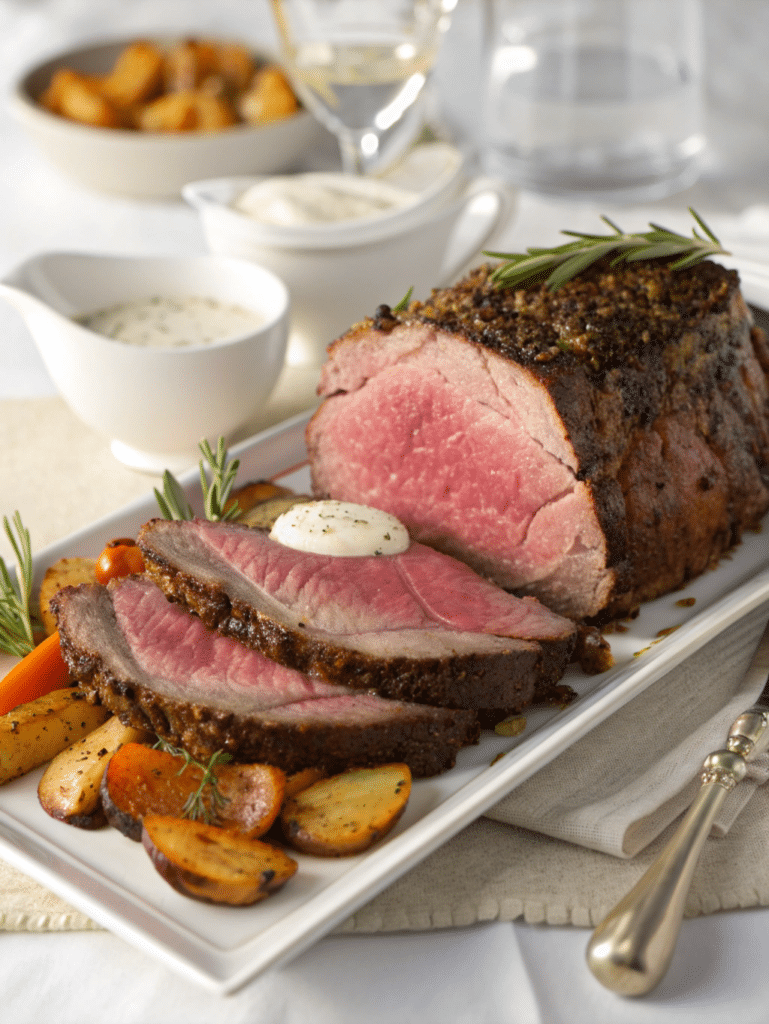
Growing up in Austin, Sunday dinners were a big deal, especially when a prime rib roast was on the table. The first time I cooked one myself, it was for a cozy holiday gathering. I remember nervously watching the oven, hoping I wouldn’t mess up what felt like the crown jewel of beef. To my surprise, the slow-roasted rib roast came out beautifully tender, with a perfect pink center and a crust that was pure flavor magic.
Since then, prime rib roast has become my go-to centerpiece for festive dinners and special weekends alike. Whether you’re making a standing rib roast for the holidays or want to try a boneless prime rib roast on a lazy winter weekend, this guide breaks it all down, temperature tricks, carving tips, and everything in between.
So if you’re aiming for the best prime rib of your life, keep reading.
In this Article
Key Takeaways: What You Need to Know About Prime Rib Roast
- Prime rib roast comes from the rib section of the cow and is prized for its marbling, tenderness, and rich flavor.
- You can choose between a standing rib roast (bone-in) or boneless prime rib roast, depending on preference and ease of carving.
- Season generously with salt, pepper, garlic, and herbs, or go with a garlic-herb butter rub for extra flavor.
- The 500 Rule: Cook at 500°F for 5 minutes per pound, turn the oven off, and let the roast sit for 2 hours, no peeking.
- Alternatively, the reverse sear method creates even doneness and a crispy crust using low and slow heat followed by a final high-temp finish.
- Always use a meat thermometer and rest the roast for 20–30 minutes before slicing to retain juices.
- Pair with nutrient-rich dishes from our Mediterranean diet meal plan for a balanced feast.
- Store leftovers properly and turn them into delicious meals like prime rib sandwiches, hash, or grain bowls.
- Plan for about 1 pound per adult when shopping for your roast.
- For trusted results, follow our prime rib roast recipe or classic prime rib recipe.
Choosing the Perfect Cut of Prime Rib Roast
Bone-in or Boneless? Start With the Right Rib Roast
A classic prime rib roast comes from the primal rib section of the cow and typically includes 2 to 7 ribs. The term “standing rib roast” refers to bone-in cuts that stand upright during roasting. Bone-in options are traditional and hold in more moisture and flavor, while a boneless prime rib roast is easier to slice and often quicker to cook.
When buying, aim for a roast with plenty of marbling. Look for USDA Prime or Choice grade beef, and if possible, ask your butcher for the best rib roast with a nice fat cap on top. A 6- to 8-pound beef rib roast will feed 6–10 guests comfortably.
You can follow this prime rib roast recipe if you’re ready to jump into it. For a more classic holiday approach, this prime rib recipe has a proven herb crust that never disappoints.
Planning Portions and Prep: How Much You Need
A good rule is 1 pound of prime rib per adult guest. If you’re serving sides like frozen meatballs in crock pot or hearty beef stew, you can scale it down slightly. For a health-conscious crowd, consider pairing the roast with a Mediterranean diet meal plan for balance.
Make sure your roast is room temperature before it hits the oven, this helps ensure even cooking and a tender result throughout.
Seasoning Your Prime Rib Roast to Perfection
Salt, Herbs, and Butter: Your Flavor Arsenal
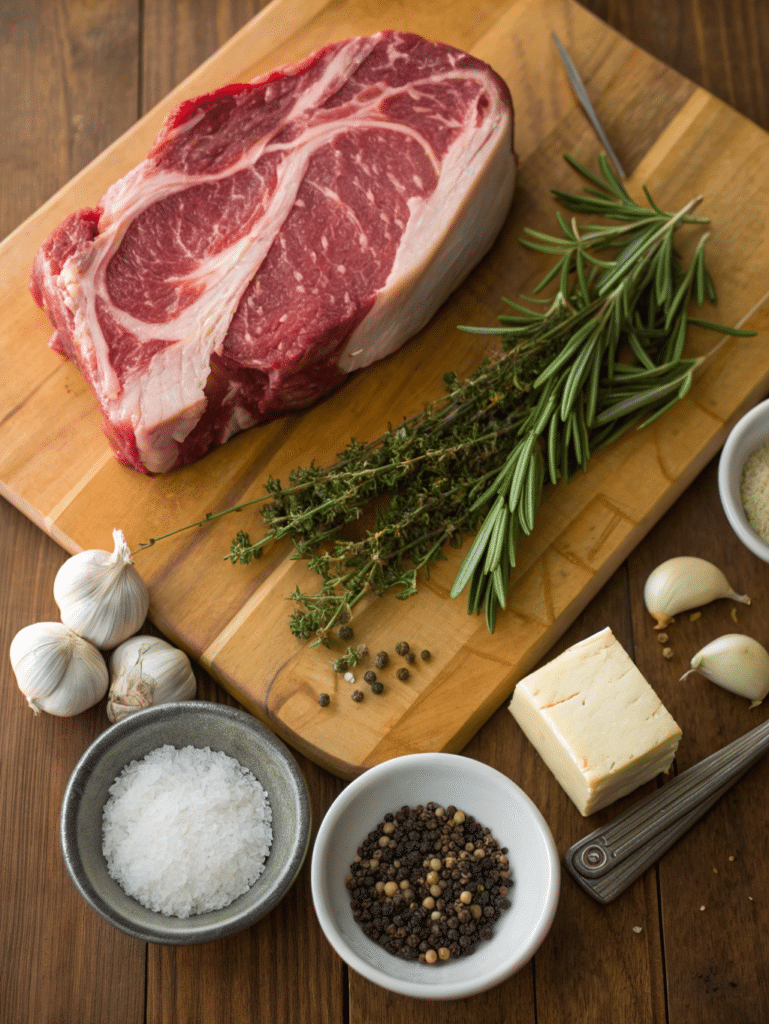
The real secret to a flavorful prime rib roast is simple: don’t overcomplicate it. A blend of kosher salt, freshly cracked black pepper, minced garlic, and herbs like rosemary and thyme is all you need to create a rich, savory crust. Whether you’re working with a boneless prime rib roast or a traditional standing version, seasoning generously is key, this cut thrives on bold flavors.
To go the extra mile, try a garlic-herb butter rub. Let your butter soften, then mix it with crushed garlic, chopped herbs, a pinch of salt, and black pepper. Slather this all over the rib roast, pressing it into every crevice. If you’re planning ahead, apply your rub 24 to 48 hours before roasting. This gives the seasoning time to penetrate deeply into the meat.
Prefer something ultra-simple but still crave-worthy? Dry brining with just salt the night before works wonders too. It draws out moisture, which then reabsorbs, creating an incredibly juicy beef rib roast.
For a visual breakdown of this process, check our prime rib recipe where we walk through both seasoning styles.
Fat Cap & Marbling: Don’t Trim That Flavor
If your roast has a generous fat cap, leave it on. That layer renders down during roasting, basting the meat naturally. You can score it lightly in a criss-cross pattern to help seasoning absorb and to crisp up the exterior beautifully.
Marbling matters just as much. It’s the fine white fat running through the meat that melts as it cooks, this is what makes rib roast buttery and tender.
Keep in mind, if you’re going for a more health-conscious angle, pair your main with something clean and fresh like a dish from our Mediterranean diet food list. It’s a great way to balance rich meats with greens, grains, and healthy oils.
Cooking Methods, Temperatures & The “500 Rule”
Understanding the “500 Rule” for Prime Rib Roast
One of the most buzzed-about tricks in cooking a prime rib roast is the 500 Rule, and yes, it works when done right. Here’s how it goes:
- Preheat your oven to 500°F
- Multiply the weight of your roast (in pounds) by 5 minutes
- Roast uncovered for that exact amount of time, then turn the oven off
- Do NOT open the oven door for at least 2 hours
This method works best for roasts between 4–8 pounds. For example, a 6-pound standing rib roast would roast at 500°F for 30 minutes. Then it stays in the oven, with the heat off, for 2 hours. The result? Perfectly medium-rare throughout with a crust that rivals any steakhouse.
If you’re skeptical, this technique is tested in our prime rib roast recipe, and the reviews speak for themselves.
Reverse Sear vs Traditional Roast: Which Wins?
Let’s break it down:
| Method | Temp & Time | Result |
|---|---|---|
| Reverse Sear | Low heat first, then blast | Even pink center, crusty outer layer |
| Traditional | 325°F or 350°F all the way | More doneness gradient, classic roast |
| 500 Rule | 500°F then off (no peeking) | Set-it-and-forget-it method, bold crust |
Reverse searing is a modern chef’s go-to. You slow-cook the beef rib roast at 225°F until it’s 10°F below your target doneness, then blast it at 500°F for 10 minutes to crisp the crust. This gives a rosy center edge-to-edge, with minimal grey zones.
For a more traditional route, you can roast the meat at 325°F or 350°F. This gives more variation, medium at the center, more done at the edges, which some families actually prefer.
So, is it better to cook prime rib at 325 or 350? If you like more crust and don’t mind slight doneness variation, 350°F is your friend. If you want a gentler cook and more control, go with 325°F.
For additional pairing inspiration, our Mediterranean diet recipes offer side dishes like roasted carrots, herbed quinoa, and garlicky greens that perfectly complement your rib roast.
Resting, Carving, and Serving Prime Rib Like a Pro
Let It Rest: The Step You Can’t Skip
You’ve seasoned, seared, and roasted your prime rib roast to perfection. But if you cut into it too soon? You’ll lose all those rich juices.
Resting is non-negotiable. After removing the roast from the oven, tent it loosely with foil and let it rest for 20–30 minutes. This allows juices to redistribute and finish the internal cooking. A boneless prime rib roast especially benefits from resting since it doesn’t have the bone to help retain heat.
Resist the urge to slice early, yes, even if your guests are hovering. That patience pays off with juicy, tender slices. While it rests, it’s the perfect time to prep sides. Try something hearty like this beef stew recipe or go lighter with a spread from our Mediterranean diet.
Slicing and Presentation: It’s All in the Details
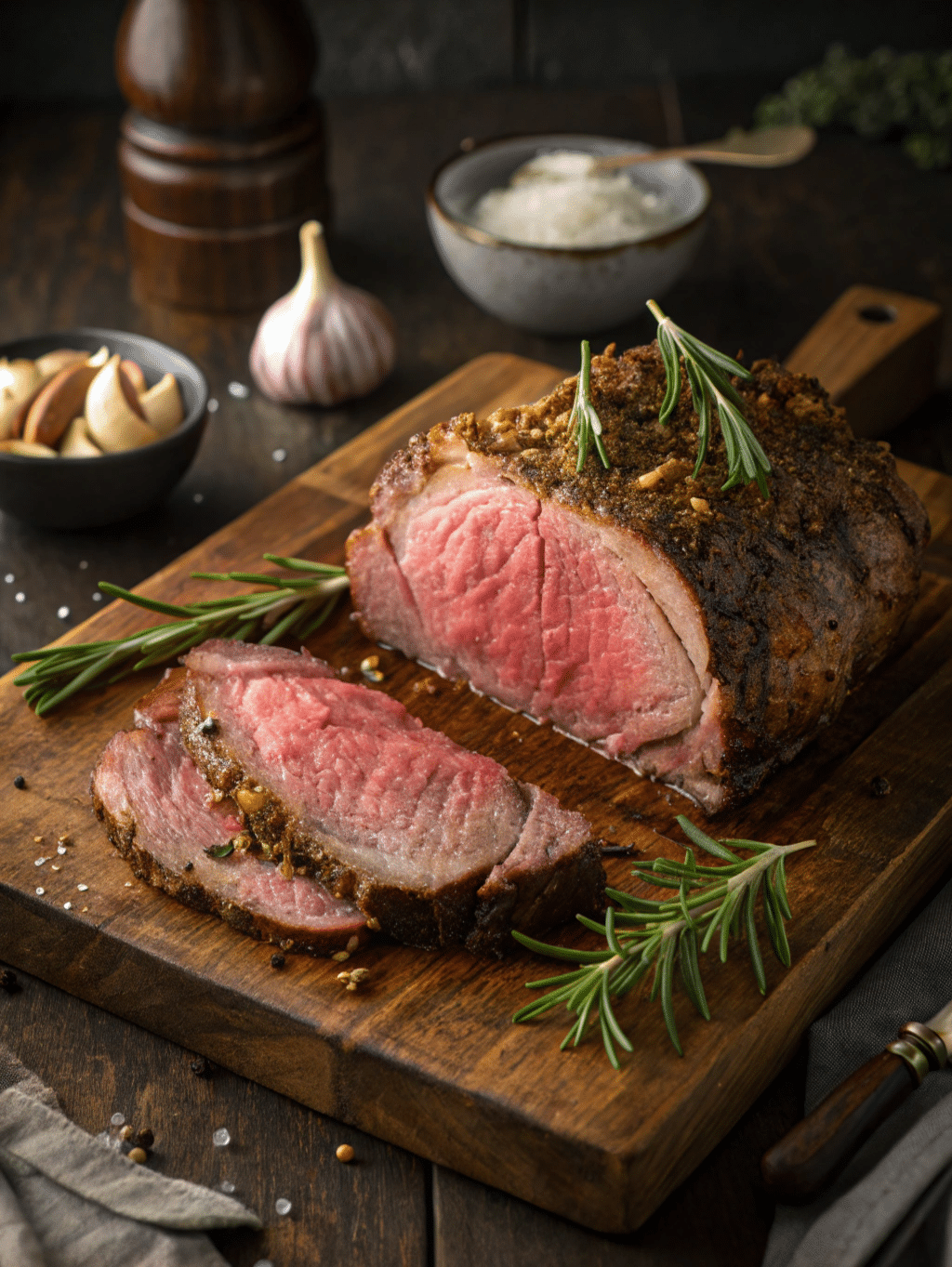
When it’s time to carve, transfer the roast to a sturdy cutting board. Use a long, sharp slicing knife (not serrated). Cut across the grain for maximum tenderness.
If you used a bone-in standing rib roast, slice between each bone to create thick, restaurant-style servings. For a boneless rib roast, aim for ½-inch slices or thinner if serving a crowd.
Want to elevate the experience? Plate it with a drizzle of natural jus (just pan drippings), or whip up a quick horseradish cream. Add a crisp salad or a grain from the Mediterranean diet food list to balance the richness.
Whether it’s your first time cooking the best prime rib or you’re perfecting your holiday tradition, presenting it beautifully makes every bite feel celebratory. You can also explore how to turn leftovers into rib sandwiches, hash, or even pair it with something light from this guide to Mediterranean eating.
Prime Rib Roast Troubleshooting & Common Mistakes
Overcooked Edges or Dry Meat? Here’s Why It Happens
Nothing’s worse than slicing into your prime rib roast only to find grey, overcooked edges or worse, dry meat. This usually comes down to a few simple mistakes:
- Starting with cold meat: Always let your roast sit out for 1–2 hours to reach room temperature before cooking.
- Skipping the meat thermometer: Guesswork is your enemy. Always use a digital probe thermometer to track internal temperature precisely.
- Not resting long enough: Cutting the meat too early lets all those juices spill out. Set a timer and walk away for 20–30 minutes post-roast.
Dry meat is especially common with leaner cuts or improperly cooked boneless prime rib roast, so always aim for USDA Prime or well-marbled Choice beef.
Got a roast that came out less than perfect? Don’t toss it! Slice thinly and reheat gently in au jus, or turn it into a next-day sandwich with horseradish sauce and arugula. It’s a delicious save.
Fixing Uneven Cooking and Temperature Drops
If the oven door was opened during the “500 Rule” method, yep, the magic breaks. That trapped heat is key to carryover cooking. Keep it sealed tight.
For uneven doneness (well-done ends and rare center), try the reverse sear method instead. It gives more control by slowly bringing the meat up to temp, then finishing with a high-heat crust.
Want consistent results every time? Build your meal plan around trusted meat-focused meals like our prime rib recipe and pair them with nutrient-rich plates from the Mediterranean diet to support variety and balance.
Nutritional Facts & Prime Rib in a Healthy Diet
How Prime Rib Fits Into a Balanced Eating Plan
Prime rib is rich, indulgent, and incredibly satisfying, but where does it sit on the health scale?
A 6-ounce serving of prime rib roast can contain about:
| Nutrient | Amount |
|---|---|
| Calories | 400–600 |
| Protein | 40–45g |
| Fat | 30–35g |
| Saturated Fat | 12–15g |
| Iron | 20% DV |
| Vitamin B12 | 90% DV |
Because it’s high in protein and iron, beef rib roast has its place in a nutrient-conscious diet. The key is pairing it smartly. Avoid heavy cream sauces and buttery sides and instead opt for Mediterranean-friendly options like olive oil-roasted vegetables, herbed farro, or grilled asparagus.
Mediterranean Pairings for a Heartier Main
You can lighten your table and add depth by pairing prime rib with these heart-healthy Mediterranean choices:
- Roasted garlic and lemon green beans
- Chickpea and arugula salad with feta
- Herb quinoa or couscous with olive oil
You can even create a full menu around this approach by using our Mediterranean meal plan. It brings balance to rich meals and makes them more versatile year-round, not just during holidays.
Prime Rib Roast
Ingredients
Equipment
Method
- Remove roast from the fridge and let it come to room temperature (about 2 hours).
- Preheat oven to 500°F.
- In a bowl, combine butter, garlic, herbs, salt, and pepper to form a rub.
- Pat the roast dry and coat all over with the garlic-herb butter mixture.
- Place roast in a roasting pan, bone side down.
- Roast at 500°F for 5 minutes per pound (example: 30 minutes for 6 lb).
- Turn off the oven and do not open the door for 2 hours.
- Remove roast, tent with foil, and let rest for 30 minutes.
- Slice between the bones and serve warm.
Nutrition
Notes
Tried this recipe?
Let us know how it was!PART 7: Leftovers & Storage – Make Your Prime Rib Go Further
Storing and Reheating Without Drying It Out
If you’re lucky enough to have leftovers, you’ve got options. Wrap the remaining rib roast tightly in foil or place it in an airtight container. Store it in the fridge for up to 4 days or freeze for up to 2 months.
To reheat without drying it out:
- Wrap slices in foil.
- Place in a 250°F oven until just warmed through (about 15–20 minutes).
- For extra moisture, add a splash of broth or pan drippings to the foil packet.
Skip the microwave, it zaps the texture and leaves the meat rubbery.
Best Leftover Recipes You’ll Crave
Get creative with your extra boneless prime rib roast:
- Prime Rib Sandwich: Thick slices on sourdough, with horseradish aioli and arugula.
- Beef Hash: Sauté diced meat with potatoes, onions, and peppers. Top with a fried egg.
- French Dip: Dip thin slices into warm au jus with crusty rolls.
- Mediterranean Prime Rib Bowl: Mix chopped roast with grains, cucumbers, tomatoes, and tahini dressing for a Mediterranean diet twist.
These meals help reduce waste and extend your investment, which is especially important when beef prices rise during the holidays.
FAQs
How many hours does it take to cook a prime rib?
Cooking time depends on size and method. A general rule: 15–20 minutes per pound at 325°F, or use the 500 Rule (5 minutes per pound at 500°F, then let sit for 2 hours). A meat thermometer is critical for accuracy.
Source: USDA Beef Cooking Guidelines
What is the 500 Rule for prime rib?
The 500 Rule means cooking your prime rib roast at 500°F for 5 minutes per pound, then turning the oven off and letting the roast sit inside, door closed, for 2 hours. This creates a perfectly pink interior and crisp crust. It’s especially popular for boneless prime rib roast.
Source: Wikipedia – Prime Rib
What is the secret to cooking a prime rib roast?
The secret? Three things: dry brining (salt the roast 24 hours ahead), choosing a well-marbled cut, and allowing the roast to rest after cooking. Also, using a reliable thermometer and applying a reverse sear or 500 Rule ensures consistent doneness from edge to edge.
Source: USDA Cooking Tips – Beef
Is it better to cook prime rib at 325 or 350?
325°F provides a gentler, more even cook with a deeper pink center. 350°F cooks slightly faster and gives a more developed crust but may create more doneness variation. Both work, you just need to adjust your timing and monitor internal temp closely.
Source: Wikipedia – Standing Rib Roast
Conclusion
There’s a reason the prime rib roast is a legendary centerpiece, it’s indulgent, impressive, and surprisingly simple once you know the method. Whether you go for a classic standing rib roast or a trimmed boneless prime rib roast, the keys to success are clear: start with quality beef, season generously, and choose the right cooking technique for your desired result.
By using either the reverse sear or the 500 Rule, you’ll unlock juicy, evenly cooked meat with a crust that turns heads. Let it rest, slice like a pro, and pair it with wholesome, flavorful sides like those in our Mediterranean diet recipes for a balanced, crowd-pleasing meal.
From holiday feasts to memorable Sunday dinners, a perfectly cooked rib roast transforms the table into something special. Armed with the tips, tools, and trusted methods in this guide, you’re ready to roast with confidence.
So grab your thermometer, preheat that oven, and bring home the best prime rib of your life.