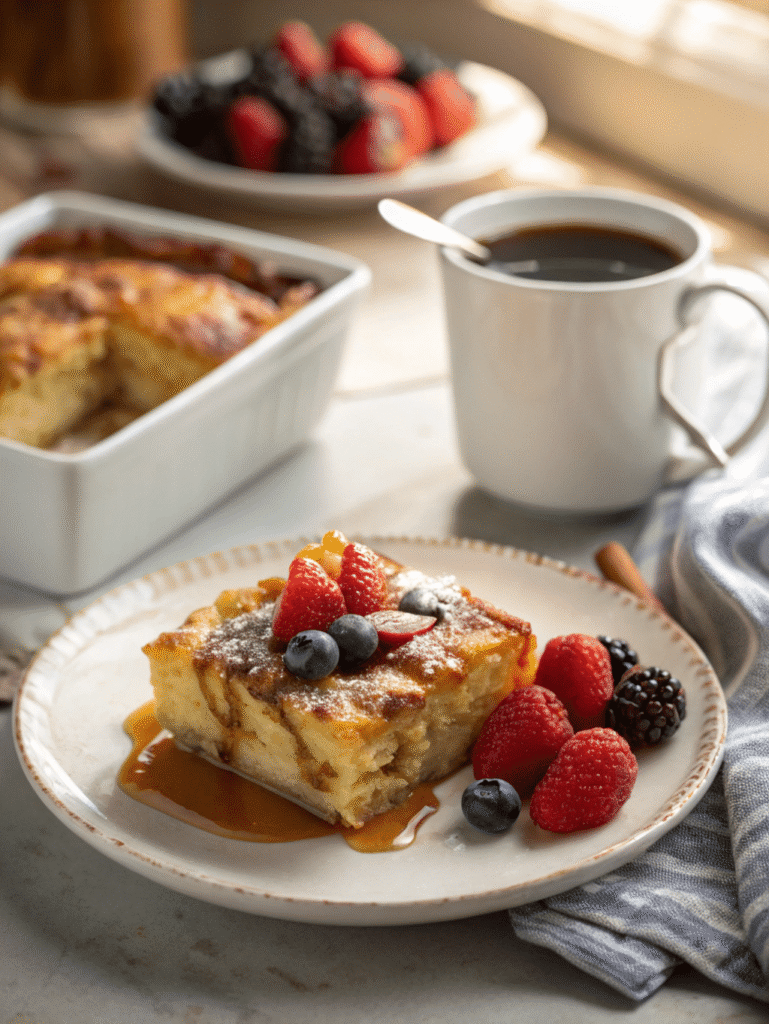
Looking for a cozy, crowd-pleasing breakfast? This french toast casserole is your new go-to. Whether it’s a holiday brunch or lazy Sunday morning, this easy baked dish turns simple pantry staples into something irresistibly warm and comforting. Unlike stovetop french toast recipes, this version is hands-off, no flipping or standing by the pan. Just layer, soak, bake, and enjoy. Whether you’re making it with fresh fruit, buttery brioche, or classic cinnamon swirl, this french toast casserole recipe is versatile enough to fit any mood or menu. Get ready to fall in love with this sweet and satisfying breakfast staple.
In this Article
Key Takeaways: What You Need to Know
- French toast casserole is a baked version of classic French toast that’s perfect for brunch, holidays, or weekend meal prep.
- You can make it ahead the night before for an easy, no-stress breakfast.
- It uses simple ingredients like bread, eggs, milk, and cinnamon, no flipping required.
- Works well with add-ins like fruit, cream cheese, or nuts for more flavor.
- This french toast casserole recipe is freezer-friendly and reheats beautifully.
- Choose sturdy bread like brioche or challah to avoid sogginess.
- Bake uncovered for a golden top, or cover halfway through for softer results.
- Easily adapted to fit Mediterranean diet recipes or special diets.
Choosing the Best Ingredients
The Right Bread for French Toast Casserole
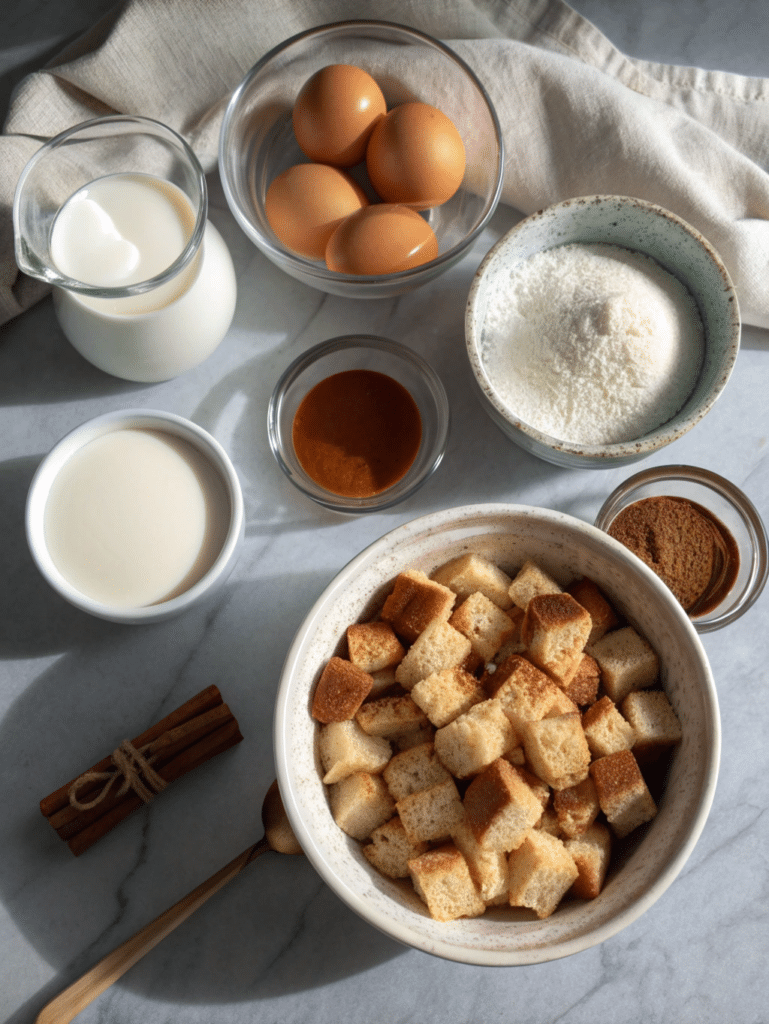
When it comes to a perfect french toast casserole, the bread matters more than you think. You need something sturdy enough to soak up the custard without falling apart. My go-to? Brioche or challah. Both are rich, slightly sweet, and hold their texture beautifully, even after soaking overnight.
You can also use French bread, sourdough, or even day-old sandwich bread in a pinch. Avoid super soft white bread unless it’s been slightly dried out. For a more nutrient-dense spin, whole grain or sprouted breads from your Mediterranean diet food list work great too.
If you’re experimenting with gluten-free versions, just choose a sturdy gluten-free loaf that toasts well. The key is structure, something that will absorb custard but not collapse when baked.
Milk vs. Cream – What Makes It Rich?
A classic french toast casserole recipe usually combines eggs with milk to make a smooth custard. But want to make it ultra-creamy? Swap in half-and-half or heavy cream for a richer, more luxurious texture. A blend of both milk and cream often gives the best balance, light enough to bake through, rich enough to taste indulgent.
If you’re keeping things light, go for 2% milk or a plant-based option like almond or oat milk. These substitutions still work beautifully in most easy french toast recipes, especially when paired with warm spices like cinnamon and nutmeg.
No matter what liquid you choose, always whisk in a little vanilla extract and a pinch of salt to bring out the flavor. And if you’re following a lighter eating style, check out this what is the Mediterranean diet guide for ingredient swaps that still taste amazing.
Make-Ahead Tips & Overnight Prep
Can You Make It the Night Before?
Absolutely. One of the biggest benefits of a french toast casserole is that it’s designed to be made ahead. In fact, this french toast casserole recipe actually tastes better when prepped the night before. Giving the bread time to soak in the rich egg-and-milk mixture helps every bite come out custardy, flavorful, and never dry.
Just assemble your french toast casserole, cover it tightly, and place it in the fridge overnight. In the morning, pull it out while your oven preheats, then bake. It’s the ultimate easy french toast recipe for stress-free brunches or holidays.
Whether you’re feeding two people or ten, this method makes making french toast totally hands-off. That’s why I often pair this with make-ahead mains like this Mediterranean diet meal plan for a balanced, no-hassle morning spread.
Storing, Chilling, and Timing the Bake
When storing your french toast casserole overnight, be sure it’s tightly sealed with plastic wrap or foil to prevent drying. It should chill for at least 4 hours, ideally 8 to 12—for the best flavor and texture.
Worried about soggy results? Don’t be. If you’re using thick-cut bread and the right egg mixture, your french toast casserole recipe will bake up with crisp edges and a soft, creamy center. Just let it sit at room temperature for 15–20 minutes before baking to ensure even cooking.
This prep-ahead style also makes it great for frozen french toast recipes. Assemble, freeze unbaked, then thaw overnight before baking. It’s one of my favorite options for planning easy french toast recipes during busy weeks or holiday weekends.
And if you’re following the Mediterranean diet, feel free to tweak ingredients to fit your goals, using almond milk, whole grain bread, or natural sweeteners.
How to Bake It Perfectly (Avoid Soggy Casserole)
Covered or Uncovered – What Works Best?
One of the most common questions I get about french toast casserole is whether to bake it covered or uncovered. And here’s the deal: you’ll usually want to bake it uncovered for most of the time. That’s how you get those golden, crisp edges that everyone fights over.
If your french toast casserole recipe starts browning too quickly, tent it loosely with foil halfway through. This method lets the center finish cooking without burning the top. Some people prefer baking it covered for the first 30 minutes, then uncovering for the last 10–15 to let the top crisp. Both methods work well, especially for overnight or large-batch french toast recipes easy to prep ahead.
The oven temperature should be around 350°F. Lower temps can lead to longer cook times, while higher temps may brown the top before the center is fully set.
And if you’re serving it as part of a full brunch spread with a main like our beef stew recipe, timing your bakes is key!
Avoiding the Dreaded Soggy Center
Let’s talk soggy centers, no one wants that in a french toast casserole. The cause? Usually too much liquid or bread that’s too soft. Always choose a sturdy loaf like brioche, French bread, or sourdough, something that holds up to the custard. If your bread is too fresh, lightly toast it or let it dry out for a few hours first.
Make sure your french toast casserole sits for at least 20–30 minutes before baking if you didn’t soak it overnight. This allows the bread to fully absorb the custard. Overly wet centers often come from not letting it rest long enough before going into the oven.
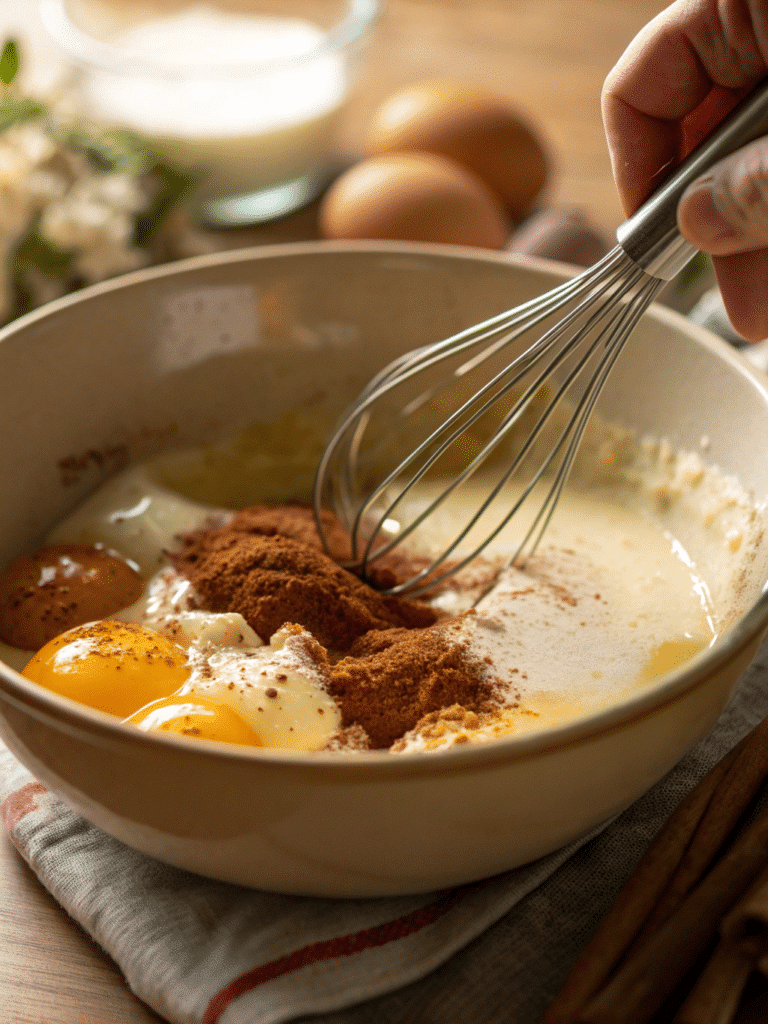
Another tip: don’t overmix the egg mixture. You want it smooth, not frothy. Froth traps air and can cause uneven baking. For a classic cinnamon french toast recipe base, add 1–2 teaspoons of cinnamon, a splash of vanilla, and a pinch of salt to your custard.
This technique has never failed me, even when testing variations for my Mediterranean diet recipes, using almond milk or whole grain bread.
When you bake it right, french toast casserole delivers a perfect balance, crispy on top, soft and custardy inside, and packed with warm, sweet flavor in every bite.
Flavor Add-Ins & Fruit Options
Best Fruits to Mix In
One of the best things about a french toast casserole is how customizable it is. Once you’ve mastered the base, you can mix in fruits, nuts, or even chocolate to make it your own. Fresh or frozen fruit brings brightness and natural sweetness to your french toast casserole recipe, turning a good dish into a truly unforgettable one.
Blueberries are a favorite, fold them in just before baking for bursts of juicy flavor. Sliced apples or pears bring fall vibes, while bananas (especially paired with peanut butter or Nutella) make for a rich, sweet version. For holiday mornings, cranberries or chopped dried apricots add a tangy twist that balances the sweetness of your custard.
Want a nutrition boost? According to the NIH’s guide on dietary fiber and fruits, adding fruits to meals like french toast casserole increases fiber intake, improves gut health, and enhances meal satisfaction naturally.
And don’t worry about freshness, frozen fruit works beautifully, too. Just be sure to toss them in a little flour or cornstarch so they don’t make your casserole watery.
This approach works especially well if you’re cooking for guests or planning meals with a seasonal focus. I love pairing fruity casseroles with something savory like this beef stew recipe when hosting big brunch spreads.
Spices and Toppings That Elevate It
If fruit is the heart of a french toast casserole, spices and toppings are the soul. Cinnamon is a must, it gives every bite that cozy, bakery-style warmth. I use it generously in every cinnamon french toast recipe variation I make. You can even add a bit of nutmeg or cardamom for extra depth.
Want to know where cinnamon comes from? Here’s the Wikipedia article on cinnamon, it’s actually the inner bark of several tree species and has been used in sweet and savory dishes for centuries.
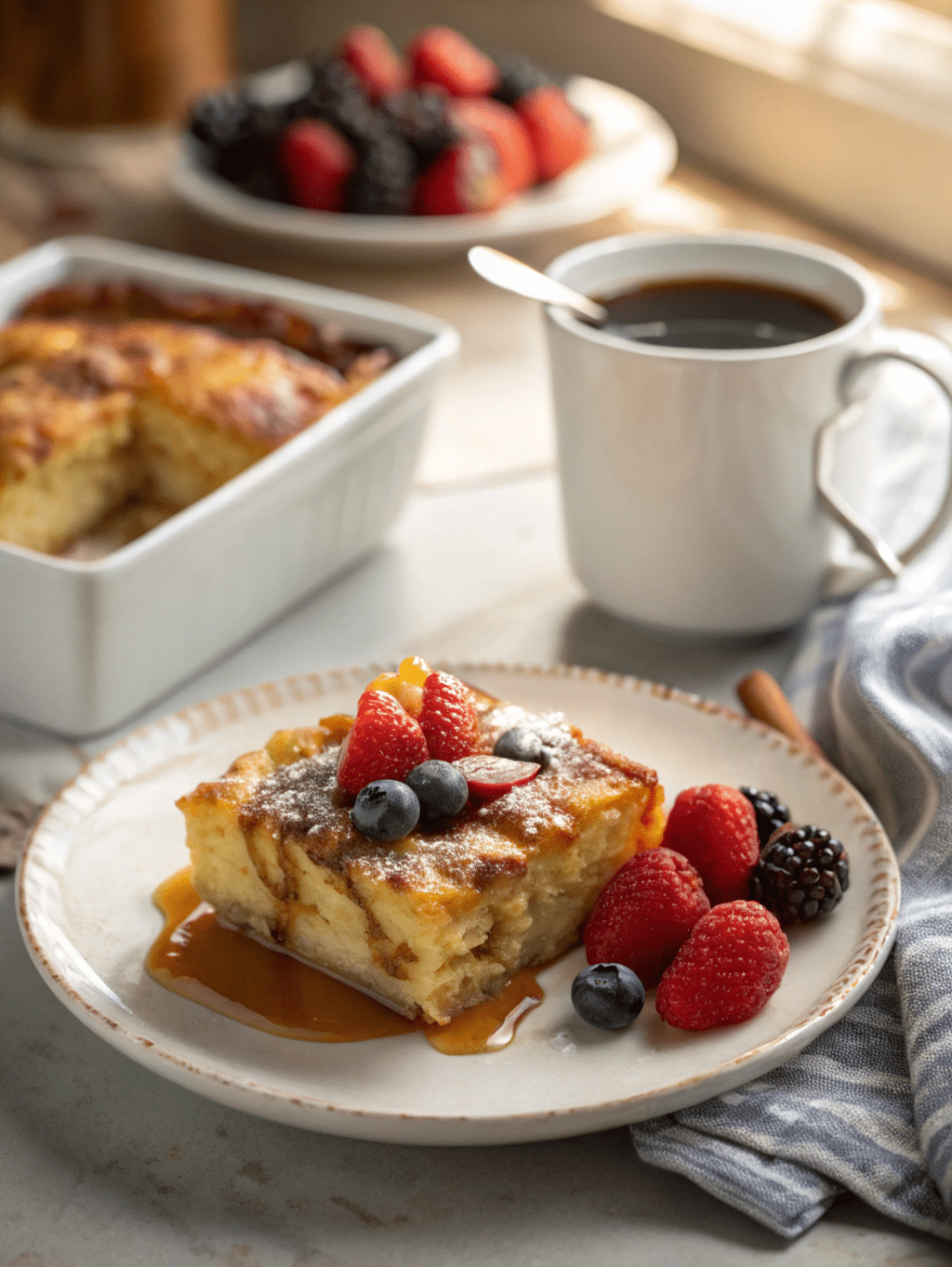
As for toppings, a buttery streusel topping is classic. Mix brown sugar, cinnamon, flour, and cold butter to create a crisp, sweet crust that bakes right on top. For something lighter, try a dusting of powdered sugar or a drizzle of maple syrup just before serving.
Looking for more wholesome or Mediterranean-style options? You can skip the added sugar and top your french toast casserole with toasted almonds, chopped walnuts, or fresh fruit slices. That’s a technique I often include in my Mediterranean diet recipes, especially when prepping for guests who prefer clean-eating brunches.
Whichever route you take, don’t skip the extras, they make every bite of your french toast casserole more delicious, memorable, and perfectly tailored to your taste.
French Toast Casserole
Ingredients
Equipment
Method
- Grease a 9×13 baking dish and add cubed bread evenly across the bottom.
- In a large bowl, whisk eggs, milk, cream, sugar, cinnamon, vanilla, and salt.
- Pour mixture evenly over the bread. Gently press down to soak.
- Cover and refrigerate overnight (or at least 4 hours).
- When ready to bake, remove from fridge and let sit 15 minutes while oven preheats to 350°F.
- If using, top with fruit and sprinkle with brown sugar mixture.
- Bake uncovered for 45 minutes, until golden and cooked through.
- Cool 10–15 minutes before slicing. Serve with maple syrup or toppings of choice.
Nutrition
Notes
Tried this recipe?
Let us know how it was!Serving & Pairing Ideas
What Goes With French Toast Casserole?
A warm, golden-baked french toast casserole is already a showstopper on its own, but pairing it with the right sides takes your brunch to a whole new level. Whether you’re serving this easy french toast recipe on a casual weekend or at a festive holiday gathering, your table deserves a balance of sweet and savory flavors.
For a complete brunch, serve your french toast casserole with crisp bacon, savory breakfast sausage, or scrambled eggs. These pair beautifully with the sweet, custardy richness of the dish. Add a side of Greek yogurt, fresh berries, or a fruit salad to keep things light and balanced.
You can also keep it elegant with a brunch charcuterie board, think nuts, cheeses, fruits, and sliced toast. This works especially well if you’re incorporating this french toast casserole recipe into a larger Mediterranean diet, inspired spread. It creates contrast while keeping the whole meal cohesive and satisfying.
And for drinks? A cup of strong coffee or a cold glass of orange juice is perfect. For celebrations, mimosas or berry smoothies add a fun, festive touch.
Savory & Sweet Pairing Combos
Pairing your french toast casserole with contrasting flavors helps bring out its buttery, cinnamon-sweet notes. Try topping your casserole slices with creamy ricotta or Greek yogurt and a drizzle of honey for a protein boost. You can also serve it with a savory dish like beef stew for a bold sweet-and-savory contrast.
For fruit lovers, sliced bananas, berries, or even grilled peaches work well on top. You can also dust your french toast casserole with powdered sugar or drizzle it with maple syrup and crushed pecans for a bakery-style finish.
Want to keep things healthy? Serve with roasted vegetables, hard-boiled eggs, or sides from this Mediterranean diet food list to balance out the sweetness without sacrificing flavor.
Whether you’re feeding family or guests, building the perfect plate around your french toast casserole makes the experience more memorable, satisfying, and yes, totally delicious.
Storage, Reheating & Freezing Tips
How Long Does French Toast Casserole Last in the Fridge?
Once baked, your french toast casserole can be stored in the refrigerator for up to 4 to 5 days. Make sure to let the casserole cool completely before covering it with plastic wrap or transferring it to an airtight container. This helps maintain the texture and prevents sogginess.
To reheat, simply warm individual slices in the microwave for 30–45 seconds or heat the entire casserole in the oven at 325°F for 15–20 minutes. This keeps the edges crisp and the center soft, just like when it was first baked. Whether you’re enjoying leftovers from your favorite french toast casserole recipe or prepping ahead for busy mornings, this storage method keeps things fresh and flavorful.
And if you’re planning out meals for the week, you can pair your leftovers with a dish from this Mediterranean diet food list for a balanced and satisfying breakfast.
Can You Freeze French Toast Casserole?
Yes, french toast casserole freezes exceptionally well, both before and after baking. If you’re freezing it unbaked, assemble the dish in a freezer-safe container, wrap it tightly in foil, and store it for up to 3 months. When you’re ready to bake, let it thaw overnight in the fridge, then proceed as usual.
Already baked it? No problem. Slice your french toast casserole into portions, wrap each in plastic, then foil, and freeze individually. This method makes it easy to grab a serving whenever you need a quick, comforting breakfast.
Whether you’re freezing for convenience or prepping a big holiday brunch ahead of time, this is one of the most freezer-friendly french toast recipes easy enough for anyone to follow. Just label and date everything for best results.
For safe food storage guidelines and freezing best practices, visit this trusted NIH resource on food storage and safety.
And if you’re curious about the origins and versatility of the dish, explore this Wikipedia article on French toast to learn how different cultures have adapted it through history.
With smart storage and simple reheating, your french toast casserole can deliver warm, flavorful breakfasts all week long, no fuss, no waste, just comfort.
FAQs About French Toast Casserole
Do you have to use milk and heavy cream?
No, but using both makes your french toast casserole richer. You can also use just milk or a dairy-free option for a lighter version.
Can you make baked French toast ahead of time?
Yes! This french toast casserole recipe is ideal for make-ahead prep. Assemble it the night before and bake in the morning.
Why is my french toast casserole soggy?
Too much liquid or overly soft bread can cause sogginess. Use day-old bread and let your french toast casserole soak overnight for best results.
What’s the best bread to use for baked French toast?
Brioche, challah, or French bread are best for french toast casserole. They soak up custard without falling apart.
Should you bake french toast casserole covered or uncovered?
Bake uncovered for a crisp top. Cover it with foil if the top browns too fast before the center sets.
What other fruit would be good mixed in?
Try blueberries, apples, bananas, or dried cranberries. These blend perfectly into any french toast casserole recipe.
What pairs well with baked french toast?
Savory sides like bacon, eggs, or sausage balance the sweetness of a french toast casserole. Fresh fruit and yogurt work great too.
How long does baked french toast last in the fridge?
Store leftover french toast casserole in the fridge for 4–5 days in an airtight container.
Can you freeze baked french toast?
Yes! Freeze slices of your french toast casserole individually or the whole dish. Thaw overnight and reheat for a quick meal.
Conclusion
Whether you’re planning a cozy weekend brunch or prepping for a big holiday breakfast, this easy-bake favorite delivers every time. From its rich custard base to endless topping options, this french toast casserole recipe fits perfectly into any kitchen routine. It’s simple enough for beginners but satisfying enough to please a crowd.
If you’re new to making french toast in casserole form, start with the basics, sturdy bread, quality eggs, and just the right amount of spice. Want to elevate it? Try a cinnamon french toast recipe twist with fresh fruit or a crunchy streusel topping.
What makes this dish truly stand out is its flexibility. It’s freezer-friendly, can be prepped ahead, and adjusts beautifully to fit dietary needs. Whether you’re following a Mediterranean diet, eating gluten-free, or just cutting back on sugar, there are easy ways to adapt the ingredients without sacrificing comfort or flavor.
Whichever version you try, you’re not just making breakfast, you’re creating a warm, memory-filled experience that brings everyone to the table. Save this recipe, try your favorite add-ins, and let the smell of sweet cinnamon welcome the morning.